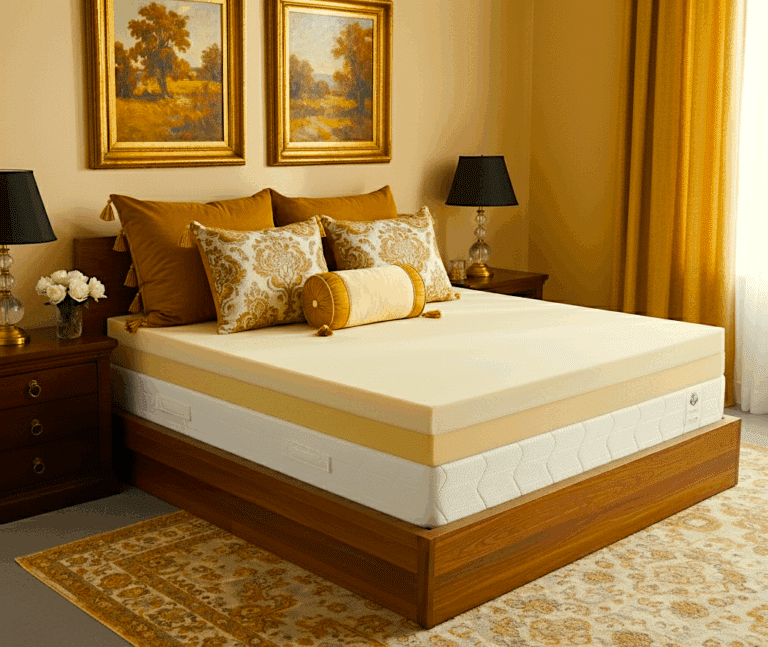
firm fom mattress support layers in a stack

The Definitive Mattress Foam Glossary

Last modified on:

Section I: HOW TO USE THIS MATTRESS FOAM GLOSSARY

This mattress foam glossary isn’t just for us DIY mattress builders. It’s for anyone who wants to understand what’s really inside a mattress.

Whether you’re planning to assemble your own mattress from components or shopping for a factory-made one, the available foam materials are largely the same across the entire industry.

Factory-made mattresses, custom boutique mattresses, and DIY builds all rely on the same families of foams, manufactured by the same suppliers, using the same basic chemistry and engineering.

If it exists, DIYers like us can buy it.

This mattress foam glossary helps you cut through the confusion and understand what each foam is, what it does, how it feels, how long it lasts, and what drawbacks to watch out for, no matter where you’re encountering it.

USE the Table of Contents!

No, seriously, you guys, this glossary is long.

Like, long long. Way more than 4000 words long.

If you are a super-duper foam nerd and want to clear your afternoon and read the whole thing, please do. We worked hard on it. There’s a lot of great information in here. If you read it in its entirety, you can run around proclaiming yourself a foam expert, and nobody would be able to dispute it.

But if you’d like to shortcut this and just get to the info you need, when you need it, the table of contents is your friend.

Section II: PRIMARY FOAM FAMILIES

(AKA the building blocks of all modern mattresses.)

These foam families form the primary comfort layers in nearly every mattress on the market.

Whether it’s a DIY mattress assembled in your bedroom, hand-made in a small boutique workshop, or mass-produced on a factory line, it’s highly likely that it has some foam in it somewhere. And it might even be entirely made of foam.

Polyfoam, memory foam, and latex foam are universal. The only differences come from specific formulations, densities, and brand-specific marketing, but the families themselves are identical across DIY and non-DIY mattresses.

Polyfoam (Polyurethane foam)

What Is It?

Polyurethane foam (usually called polyfoam) is the most common cushioning material in modern mattresses.

It’s a petroleum-based foam (created by reacting polyols with isocyanates), forming an open-cell structure that can feel anything from ultra-plush to quite firm.

If you’ve ever sat on a couch, slept in a hotel, or bought a bed-in-a-box, you’ve experienced polyfoam. It’s everywhere.
WHERE TO BUY: POLYFOAMS

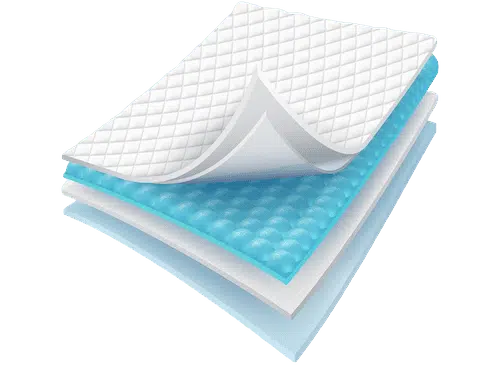
mattress comfort layers illustration

Where You’ll See It

Polyfoam is one of the core ingredients in nearly all mattresses, including big-brand factory models, high-end boutique models, and open-source (aka DIY) builds.

There is no ‘exclusive’ version that only mattress manufacturers can buy.

We, the DIYers, can get the exact same stuff.

Variations You’ll Encounter

  • Conventional Polyfoam: Basic, cost-effective, lower-density foam
  • HD Polyfoam (High-Density): Better durability and support
  • HR Polyfoam (High-Resilience): Bouncier, more elastic, sometimes used as a lower-cost latex alternative

Feel / Performance

Polyfoams can feel different depending on the type:

  • Soft and marshmallowy (low density, low ILD)
  • Medium and balanced
  • Firm and supportive (higher density or transitional grades)

HR polyfoam, in particular, can have a lively, buoyant feel that surprises people who assume all polyfoam is ‘cheap’ or spongy.

Durability

Durability varies dramatically based on:

  • Density (higher is better; aim for 1.8–2.5+ lb/ft³ in comfort layers)
  • Manufacturing quality
  • Layer thickness & placement

Low-density polyfoam is the notorious sag culprit in many mass-market pillowtops.

Off-Gassing

Because it’s petrochemical-based, new polyfoam may off-gas VOCs when first unwrapped.

CertiPUR-US® certified polyfoam is lower-emission but not emission-free.

Marketing Claims vs Reality

  • ‘Super Soft Cloud Foam‘ → usually low-density polyfoam
  • ‘High-Resilience Latex-Like Foam‘ → sometimes true (HR foam can mimic latex), sometimes hype
  • ‘Ultra Support Foam Core‘ → usually higher-density poly, which is perfectly fine for support layers

When It’s Great 🙌

  • Budget-friendly comfort layers
  • Bouncy transitional layers
  • Building a lightweight guest mattress

When It’s Not Ideal 🫤

  • When long-term durability is critical
  • When you want natural or low-VOC materials
  • When you’re building for heavy sleepers (unless density is high, in which case, carry on)

Memory Foam (Viscoelastic Polyfoam)

What Is It?

Memory foam is a modified polyurethane foam engineered to respond slowly to pressure and heat.

It creates that famous ‘melting,’ contouring, deep-hug feel.

Originally developed by NASA (because of course it was), the material became a mattress superstar in the 1990s and still reigns in many mattresses today.
WHERE TO BUY: MEMORY FOAM

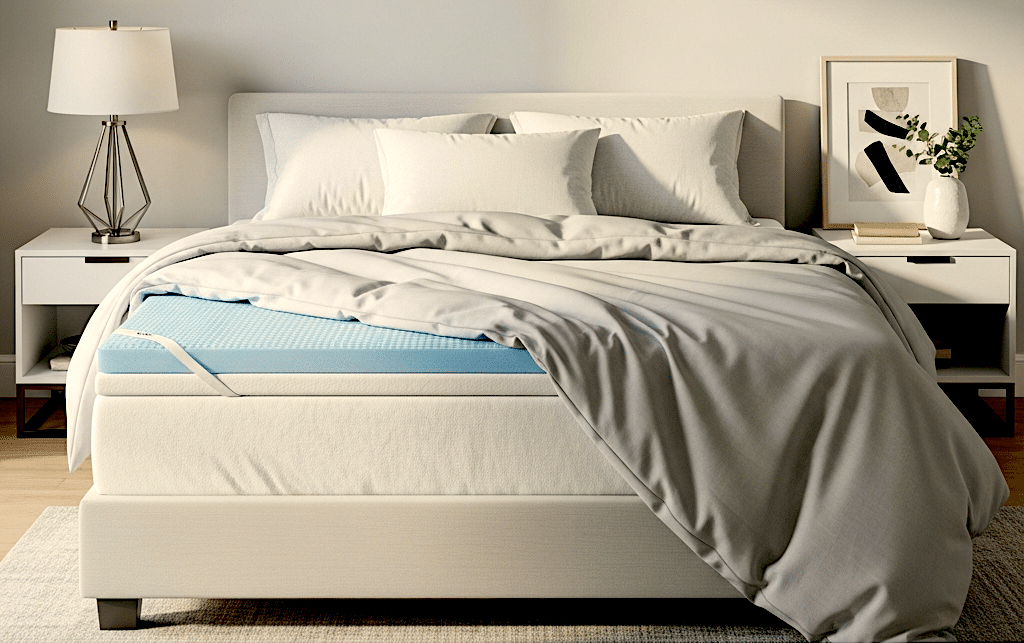
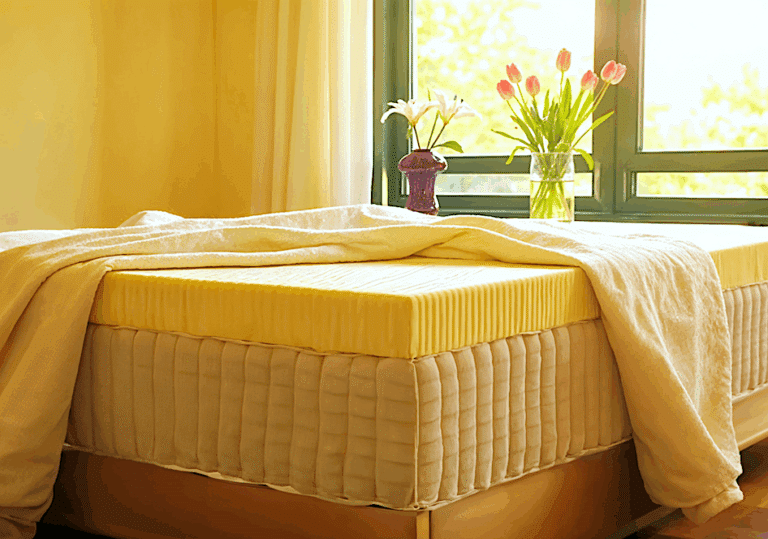
Cozy bed with memory foam topper

Where You’ll See It

Memory foam is used universally across the mattress world, from open-source DIY builds to the top-selling retail mattresses.

It’s an incredibly popular component of many mattress comfort layers and comes in a wide variety of forms, though some of those iterations are more marketing hype than proven improvements.

And again, there is no special manufacturer-only memory foam; as DIYers, we have the same access all the big brands do.

Variations You’ll Encounter

  • Traditional memory foam: slow recovery, deep contour
  • Open-cell memory foam: quicker recovery, more airflow
  • Gel-infused memory foam: small cooling benefit
  • Copper/graphite/charcoal memory foams: add-ons for marketing + mild functional tweaks
  • Fast-response memory foams: blends meant to reduce the ‘stuck in sand’ feel

Feel / Performance

Memory foam is characterized by:

  • Deep contouring
  • Very strong pressure relief
  • Motion absorption
  • Slower movement and repositioning
  • A sensation of ‘sink’ rather than ‘bounce’

Durability

  • ILD = how firm or soft
    Density = durability
  • Higher ILD: Firmer foam
    Lower ILD: Softer foam
  • Density is measured in lbs/ft³ (pounds per cubic foot)
  • Look for 4lb or 5lb foam for best longevity
  • Lower-density foams (2–3 lb) tend to break down fastest

Off-Gassing

  • Can off-gas noticeably, especially lower-quality or non-certified foams
  • CertiPUR-US® versions reduce (but may not eliminate) VOC exposure
  • Sensitive sleepers may notice a ‘chemical’ smell during early airing-out

Marketing Claims vs Reality

  • ‘Gel keeps you cool all night‘ → gel delays heat buildup but doesn’t eliminate it
  • Copper is naturally antimicrobial‘ → true! (but doesn’t change support/feel)
  • Graphite wicks heat‘ → slightly improves thermal conductivity

Most claimed ‘cooling’ benefits are modest. The structure of memory foam itself is still heat-retentive.

When It’s Great 🙌

  • Side sleepers
  • Pressure relief seekers
  • People with sharp shoulders/hips
  • Toppers for old mattresses (although no topper can overcome sag)
  • Couples needing motion isolation

When It’s Not Ideal 🫤

  • Hot sleepers
  • Combination sleepers who move often
  • People who dislike “sink-in” feel
  • Sleepers 225–300+ lbs (without high-density support layers underneath)
  • Those seeking very low-VOC or natural materials

Latex Foam

What Is It?

Latex foam is made from rubber, either natural (Hevea tree sap), synthetic (SBR rubber), or a blended combination..

It’s produced via two methods:

  • Dunlop: denser, more supportive, slightly firmer feel
  • Talalay: bouncier, more consistent, more ‘airy’ feel

Latex is the gold standard for durability and responsiveness.
WHERE TO BUY: LATEX FOAM

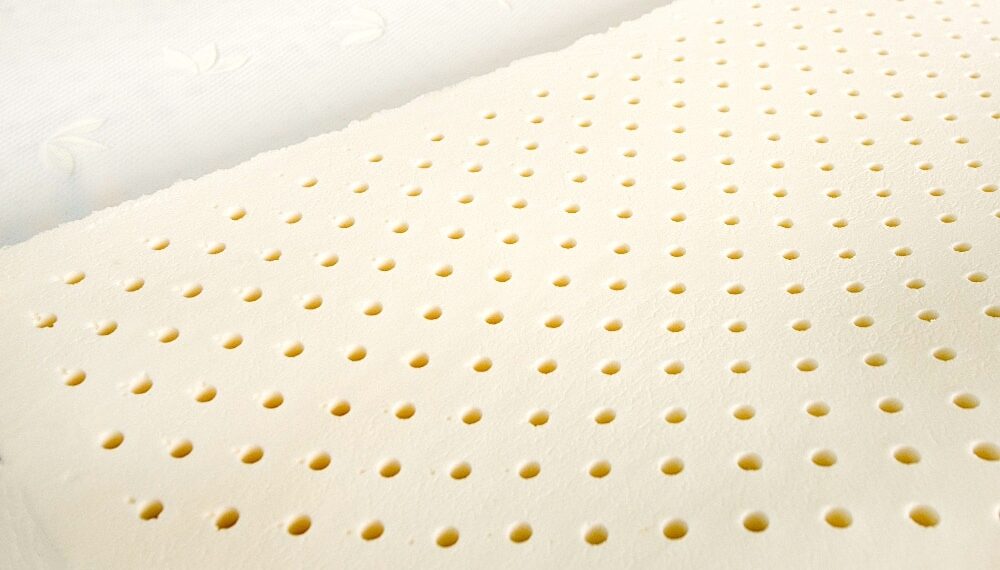
latex foam slab
latex diy mattress latex slabs

Where You’ll See It

Latex, in all its forms, appears across the full spectrum of mattresses: luxury brands, organic brands, hybrid pocket-coil builds, and open-source DIY mattresses.

Latex sold to us DIYers is the very same latex sold to manufacturers, often literally from the same suppliers and molds.

Variations You’ll Encounter

  • Organic Latex (GOLS-Certified): Made from 100% natural latex sap grown and processed under organic certification. Same feel as natural latex; the difference is strict traceability and regulated production.
  • Natural Latex (Non-Organic): Made from rubber tree sap but not certified organic. Same core performance as organic latex; differences lie in farming and processing standards, not feel.
  • Synthetic Latex (SBR Latex): Made from petroleum-based synthetic rubber (styrene-butadiene). More uniform, slightly less ‘alive’, often less durable.
  • Blended Latex (Natural + Synthetic Mix): A mix of natural and synthetic rubber, often 70/30 or similar. Consistent feel, lower cost, commonly used in Talalay latex.
  • Talalay Latex (Processing Type): Lighter, more breathable, more buoyant. Often used for plush comfort layers. Can be natural, synthetic, blended, or organic.
  • Dunlop Latex (Processing Type): Denser, firmer, more supportive. Often used for support layers or firmer comfort layers. Can be natural, synthetic, blended, or organic.
  • 100% Natural Latex (Marketing Term): Usually means the rubber component is natural latex, but still includes small processing additives. Not the same as organic.
  • Commonly Misleading Term: Organic Latex Blend Not possible. Blended latex cannot be organic.

Feel / Performance

  • Immediate responsiveness (no “slow-melt”)
  • Buoyant lift
  • Excellent breathability (especially Talalay)
  • Supportive contouring without deep sink
  • Very long lifespan
  • A naturally cooler feel than memory foam

Durability

  • Latex is the most durable comfort-layer foam in the mattress world.
  • Natural latex can last 10–20 years with minimal degradation.
  • Synthetic latex and synthetic blends have lower lifespans, but are still superior to most polyfoams.

Off-Gassing

  • Natural or organic latex may have a mild ‘rubbery’ smell, not chemical
  • Very low VOCs when certified (OEKO-TEX / GOLS)
  • Latex allergies: rare for finished foam, but potentially relevant for highly sensitive individuals

Marketing Claims vs Reality

  • ‘All-natural latex‘ → sometimes true, sometimes 30% natural + 70% synthetic
  • Organic latex‘ → only true if GOLS certified
  • ‘Talalay is softer‘ → often, yes, but ILD matters more than process
  • ‘Breathable and cooling‘ → genuinely more breathable than poly/memory foams

When It’s Great 🙌

  • Hot sleepers (Latex sleeps cooler)
  • Combo sleepers (easy to move around)
  • People wanting long-term durability
  • Anyone seeking sustainable materials
  • Those DIYing premium mattresses
  • Sleepers who dislike sinking into memory foam

When It’s Not Ideal 🫤

  • When budget is extremely tight
  • When a very slow, enveloping contour is desired
  • For extremely heavy sleepers, unless layered properly (soft latex can bottom out if too plush or too thin, so higher BMI sleepers should use firmer latex foams)

Section III: SPECIALTY & ENHANCED FOAMS

These aren’t entirely new foam families; they’re ‘modifiers’, additives, or processing tweaks applied to polyfoam, memory foam, or latex.

Some make meaningful changes. Some mostly make marketing departments happy.

Gel-Infused Foam

What It Is: Foam (usually memory foam) infused with gel beads, gel swirls, gel particles, or gel ‘microcapsules.’

What It’s Made Of

  • Base foam (poly or memory)
  • Gel additives (polymer-based, sometimes phase-change)

Marketing Claims

  • ‘Cools you while you sleep’
  • ‘Dissipates heat instantly’
  • ‘Temperature-regulating’

Reality Check

  • Graphite improves heat conductivity more than gel, but only modestly.
  • No meaningful change in pressure relief.

Feel & Performance

  • Mildly cooler initial feel
  • Slightly firmer than non-infused foam

Best Use Cases

  • Warm sleepers wanting cooler memory foam
  • Latex buyers who want improved breathability

Drawbacks

  • More expensive
  • Cooling is still limited by airflow, not conductivity alone

Graphite-Infused Foam

What It Is: Foam infused with powdered graphite, often memory foam or latex.

What It’s Made Of

  • Base foam (usually memory foam, sometimes Talalay latex)
  • Graphite particles

Marketing Claims

  • ‘Superior cooling’
  • ‘Antimicrobial’
  • ‘Enhanced pressure relief’

Reality Check

  • Gel does slightly delay heat buildup.
  • It does not provide continual cooling throughout the night.

Feel & Performance

  • Slightly firmer than the same foam without gel
  • More pressure relief than plain polyfoam
  • A modest improvement in thermal conductivity

Best Use Cases

  • Sleepers who want to use memory foam for its ‘sink-in’ qualities, but who also desire a bit of cooling to combat the typical ‘heat trap’ properties of regular memory foam.

Drawbacks

  • Cooling effect is temporary
  • Doesn’t address airflow limitations of dense memory foam

Copper-Infused Foam

What It Is: Memory or polyfoam infused with copper particles.

What It’s Made Of

  • Base foam (poly or memory)
  • Copper microbeads or powders

Marketing Claims

  • ‘Antimicrobial’
  • ‘Anti-inflammatory’
  • ‘Stays cool all night’

Reality Check

  • Yes! Copper is antimicrobial.
  • No, it won’t cure back pain.
  • Cooling benefits are mild.

Feel & Performance

  • Slightly firmer
  • May have a very subtly ‘crisp’ initial feel
  • Very small cooling bump

Best Use Cases

  • People highly concerned about odor or bacteria
  • Anyone upgrading a memory foam comfort layer

Drawbacks

  • Price premium
  • Marketing hype far exceeds functional improvement

Charcoal-Infused Foam

What It Is: Foam infused with activated charcoal powder.

What It’s Made Of

  • Base foam (poly or memory)
  • Activated charcoal powder

Marketing Claims

  • ‘Odor-absorbing’
  • ‘Moisture-wicking’
  • ‘Purifying’

Reality Check

  • Yes! This one can actually help with odor control and moisture to a small degree.

Feel & Performance

  • Identical to base foam
  • Slightly drier-feeling surface (very mild)

Best Use Cases

  • Humid climates
  • Toppers to refresh older mattresses with trapped odors

Drawbacks

  • Not a substitute for airflow
  • Doesn’t change durability

Lavender-Infused Foam

What It Is: A polyfoam scented with lavender fragrance.

What It’s Made Of

  • Sometimes this is real lavender essential oil
  • Sometimes a synthetic lavender fragrance
  • Sometimes a blend, sellers rarely distinguish which

Marketing Claims

  • ‘Relaxation and better sleep!’
  • ‘Aromatherapy for stress reduction!’
  • ‘Natural calming properties!’

Reality Check

  • When real lavender is used, effects are mild and evaporate very quickly.
  • When synthetic fragrance is used, it’s just scented foam.

Feel & Performance

  • No change to support, contouring, temperature regulation, or durability.
  • Zero foam-performance benefits.
  • Only difference is smell, which fades quickly.

Best Use Cases

  • Only for users who really enjoy a scented sleep surface.
  • Works better for pillows than full mattresses (because you’re closer to it).
  • A ‘new foam smell replacement’

Drawbacks

  • Scent lasts 2–6 weeks max (much shorter for natural oils)
  • Synthetic fragrances can trigger sensitivities (headaches, respiratory irritation, allergies, etc.) in some sleepers.

Green Tea Infused Foam

What It Is: Polyfoam infused with green tea extract and/or green tea fragrance as a deodorizing or ‘freshness’ agent.

Green tea extract = mild antioxidant | Green tea fragrance = synthetic scent | Most products use both.

What It’s Made Of

  • Poly or memory foam infused with: green tea extract (often powdered)
  • Synthetic green tea fragrance
  • Occasionally, it’s combined with charcoal

Marketing Claims

  • ‘Naturally refreshing’
  • ‘Eliminates odors’
  • Antioxidant-infused comfort’
  • ‘Cleaner, purer sleep environment’

Reality Check

  • Green tea extract has limited deodorizing ability, mostly during manufacturing.
  • Odor control mainly comes from charcoal.

Feel & Performance

  • Feels identical to the base foam.
  • May smell faintly herbal or ‘clean’ at first but the scent fades over time.

Best Use Cases

  • Budget-friendly toppers if someone likes the initial smell.
  • Paired with charcoal-infused foam for odor control, if desired.
  • Pillows (closer proximity makes the scent more noticeable).

Drawbacks

  • Scent lasts 1–3 months max, sometimes less.
  • Synthetic fragrance can bother sensitive sleepers.
  • Often used to make low-density foam sound more appealing.

Plant-Based / Bio / Soy Foams

What It Is: Polyfoams or memory foams partially replacing petrochemical polyols with plant oils (castor, soy, etc.)

What It’s Made Of

  • Base foam (poly or memory)
  • Plant oils like castor, soy, etc.

Marketing Claims

  • ‘Natural’
  • Eco-friendly’
  • ‘Non-toxic’

Reality Check

  • Bio-based foams usually contain 10–30% plant-derived content. The majority is still petrochemical

Feel & Performance

  • Same as standard poly or memory foam
  • Slightly lower VOCs in some cases

Best Use Cases

  • People wanting lower environmental impact or with mild sensitivities to chemical smells

Drawbacks

  • Misleading ‘natural’ marketing
  • Not equivalent to latex
  • Not biodegradable

Section IV: BRANDED & TRADEMARKED FOAMS

These are subcategories of the three major foam families; they are branded versions, proprietary blends, or marketing names for tweaks on polyfoam, memory foam, or latex-like materials.

Many sound futuristic. Most are variations on existing foam chemistry.

Serene® Foam

What It Is

A proprietary polyfoam formulation created to mimic some of the contouring of memory foam without the “sink” and slow response.

Base Material

High-resilience polyurethane foam.

Marketing Claims

  • ‘Pressure point reduction!’
  • ‘Superior airflow!’
  • ‘Memory foam alternative without the heat!’

Reality Check

  • It does feel more contouring than typical polyfoam.
  • It does not behave like true memory foam.
  • Airflow is somewhat improved due to internal cell structure.

Feel & Performance

  • Medium-fast response
  • Less bouncy than HR polyfoam
  • Less ‘hug’ than memory foam
  • Comfortable as a top or mid-layer in open-source / DIY builds

HyPURGel™ Foam

What It Is

A polyurethane foam infused with gel particles to add responsiveness and a cooler initial feel.

Base Material

Polyfoam + gel infusion.

Marketing Claims

  • ‘Advanced cooling technology!’
  • ‘Pressure relief like nothing else!’

Reality Check

  • It’s essentially gel-infused polyfoam, a perfectly fine product, but not a revolutionary material.

Feel & Performance

  • Slightly springier than standard polyfoam
  • Mild cool-on-contact effect
  • Good for transitional layers

TitanFlex® Foam

What It Is

A hyper-elastic polyfoam designed by Brooklyn Bedding to mimic latex-like bounce.

Base Material

High-resilience polyfoam with elastic additives.

Marketing Claims

  • ‘Responsive like latex!’
  • ‘Superior cooling!’
  • ‘Premium pressure relief!’

Reality Check

  • It is bouncier and livelier than standard polyfoam.
  • Not as durable as real latex.
  • Cooling varies by formulation.

Feel & Performance

  • Fast response similar to latex
  • Buoyant surface feel
  • Suitable substitute for latex in budget builds

Energex® Foam

What It Is

A responsive polyfoam blend often used as a transition layer below memory foam and above support layers.

Base Material

High-resilience polyurethane foam.

Marketing Claims

  • ‘High-energy foam!’
  • ‘Next-level responsiveness!’

Reality Check

  • It’s legitimately more responsive than memory foam and slightly more elastic than typical poly.
  • Not a miracle, but a solid transitional foam.

Feel & Performance

  • Soft, plush responsiveness
  • Reduces ‘stuck’ feeling when used below memory foam
  • Works well in hybrid builds

Lux Foam

What It Is

A high-density, high-firmness polyfoam commonly used in budget mattresses and DIY builds requiring a firmer base or transitional support.

Base Material

Polyfoam, typically around 2.2 – 2.5 lb/ft³ density.

Marketing Claims

  • ‘High-support foam’
  • ‘Extra-durable’
  • ‘HD comfort’
  • ‘Luxury feel at a budget price’

Reality Check

  • It is firmer and more supportive than standard polyfoam.
  • It is not equivalent to latex in lifespan.
  • The ‘lux’ naming often oversells it, but for the price, it’s solid.

Feel & Performance

  • Firm to very firm (depending on ILD)
  • Good structural support
  • Minimal give/contour
  • Far less springy than latex or HR polyfoam
  • Very predictable performance: what you feel on day one is what you get

Celliant® Foam

What It Is

A polyurethane foam infused with a blend of ceramic, silica, and oxide particles designed to convert body heat into infrared (IR) energy.

Base Material

Polyfoam infused with Celliant® ceramic/oxide minerals.

Marketing Claims

  • ‘Infrared energy helps increase local blood flow’
  • ‘Enhanced recovery while you sleep’
  • ‘Improves tissue oxygenation’
  • ‘Temperature-regulating’

Reality Check

  • Peer-reviewed research does show measurable effects on microcirculation and oxygenation.
  • These studies focus mainly on fabrics, not foam.
    Real-world benefits in a foam layer (under a mattress cover, sheets, PJs) may be milder than marketing suggests.

Feel & Performance

  • Feels just like the base polyfoam, not like a specialty foam.
  • No difference in bounce, contour, or softness.
  • Any benefit would be from the IR-reflective minerals, not from changes in foam behavior.

Octaspring®

What It Is

Octasprings are spiral-cut, cylindrical foam ‘springs’ designed to mimic the responsiveness of metal coils while preserving all-foam construction.

Base Material

Polyfoam infused with Celliant® ceramic/oxide minerals.

Marketing Claims

  • ‘Infrared energy helps increase local blood flow’
  • ‘Enhanced recovery while you sleep’
  • ‘Improves tissue oxygenation’
  • ‘Temperature-regulating’

Reality Check

  • Peer-reviewed research does show measurable effects on microcirculation and oxygenation.
  • These studies focus mainly on fabrics, not foam.
    Real-world benefits in a foam layer (under a mattress cover, sheets, PJs) may be milder than marketing suggests.

Feel & Performance

  • Feels just like the base polyfoam, not like a specialty foam.
  • No difference in bounce, contour, or softness.
  • Any benefit would be from the IR-reflective minerals, not from changes in foam behavior.

Section V: COMPARISON TABLES

High-level summaries for DIYers or mattress shoppers who want the TL;DR version of each foam family.

A. Polyfoam vs Memory Foam vs Latex

Feature

Polyfoam

Memory Foam

Latex

Material Type

Polyurethane

Viscoelastic polyurethane

Rubber (natural/synthetic)

Feel

Springy to soft; very wide range

Slower response, contouring ‘hug’

Buoyant, highly responsive

Responsiveness

Fast to Slow

Slow

Very fast

Pressure Relief

Moderate

Excellent

Very good

Heat Retention

Depends

High (unless open-cell/infused)

Low

Durability

Moderate (density-dependent)

Moderate (density-dependent)

Very high

Off-Gassing

Moderate to High, type dependent

Moderate–high

Low for natural, higher for synthetic

Cost

Low to moderate

Moderate

High

Best For

Budget builds, transitional layers

Deep contour lovers, side sleepers

Hot sleepers, durability seekers, organic/natural preferences

Common Drawback

Sags in low-density versions

Traps heat, slow movement

Higher cost, heavier

B. Infused Foams

Infusion Type

What It Actually Does

Marketing Claims

Cooling Impact

Feel Change

Notable Drawbacks

Gel

Slightly improves thermal conductivity

“Ice-cool sleep”

⭐⭐ (modest)

Slightly firmer

Effect fades as gel absorbs heat

Graphite

Better heat conduction than gel

“Superior cooling”

⭐⭐⭐ (better)

Mild firming

Cost increase

Copper

Antimicrobial; minor cooling

“Pain-relieving, anti-inflammatory”

⭐⭐ (modest)

Slight crispness

Benefits overhyped

Lavender/Green Tea

Adds temporary scent

“Relaxing and refreshing”

⭐ (poor)

No real feel change

Mostly marketing

Charcoal

Odor/moisture control

“Purifying, detoxifying”

⭐ (poor)

Identical to base foam

Doesn’t affect support


Section VI: WHERE TO LEARN MORE

If you’d like to explore any of these materials more deeply, The Mattress Rebellion offers a growing library of guides on every major mattress component.

Each deep dive expands on it’s subject, giving you the full context, science, and practical guidance for building or evaluating any open-source (DIY) or factory-made mattress.

EXPLORE MORE